
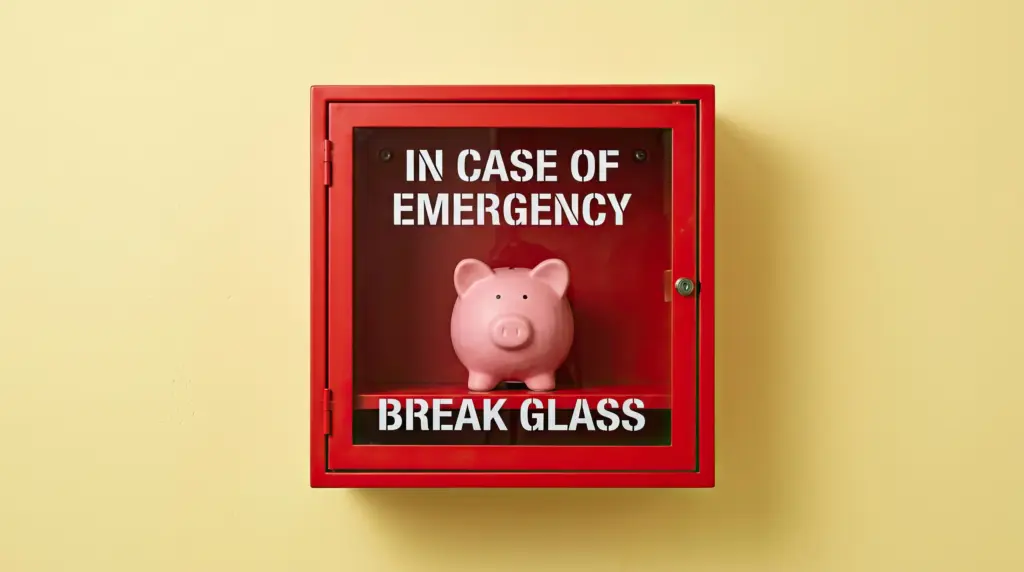
An emergency fund is supposed to be simple: save a few months of expenses, keep it somewhere safe, use it when something breaks. That advice was written for someone with the same paycheck every two weeks. It doesn’t hold up as well when your hours swing with the weather, the job pipeline, or the season, and a lot of standard financial advice just doesn’t account for that.
Here’s how to build one anyway, using a paycheck that isn’t predictable.
How much should you actually keep in it?
The standard number floating around is three to six months of expenses. For a lot of trades workers, that number is right, but the reason matters more than the figure. If your work is seasonal, subject to weather delays, or dependent on one contractor’s pipeline of jobs, you’re carrying more income risk than someone in a salaried office job. That risk is exactly what the fund exists to cover, so err toward the higher end of that range, not the lower one, if your work has any of those patterns.
Start smaller if six months feels impossible from where you’re standing. A first goal of one month of essential expenses, the number that covers rent, utilities, and groceries, gets you meaningfully more protected than zero. Build from there once that first cushion exists.
Saving on an inconsistent paycheck
The trick isn’t saving a fixed dollar amount every week. It’s saving a percentage, so the contribution scales with what actually came in.
On a full paycheck, set aside a set percentage, commonly 10 to 20 percent, before anything else gets spent.
On a lighter paycheck, from a shorter week or a rain delay, still save something, even if it’s 5 percent, so the habit doesn’t disappear the moment income dips.
On a big paycheck, overtime, a bonus, or a per diem week that ran heavier than usual, put a larger chunk than usual straight into the fund. Windfalls disappear fast if they hit a regular checking account next to everyday spending money. Moving that money before it has a chance to blend in is the difference between it building your cushion and it quietly funding a few extra dinners out.
If per diem or travel pay is part of your income and you’re not sure how much of it should count as spendable versus savable, our guide on per diem and travel pay breaks down what you’re actually owed and how it’s taxed, which affects how much of it is really yours to save.
Where to keep it
An emergency fund needs to be reachable within a day or two, but not so reachable that it’s sitting in the same account as your everyday spending money. A separate savings account, ideally at a different bank than your checking account, adds just enough friction to stop impulse dips without making the money hard to get to when you actually need it.
Skip anything that ties the money up for a fixed term or exposes it to market swings. This fund isn’t an investment. Its entire job is to be there, intact, the day the truck breaks down or the hours get cut.
What actually qualifies as an emergency
A fund gets drained fast if “emergency” quietly expands to cover things that aren’t. A rough guide: if it’s unexpected, necessary, and time-sensitive, it qualifies. A blown transmission that gets you to work, a medical bill, an unplanned gap between jobs. A sale on tools you don’t need yet, a vacation, a purchase that could wait a paycheck or two, doesn’t.
When you’re not sure, ask one question: would waiting two weeks to handle this cause a real problem? If yes, it’s likely a legitimate draw on the fund. If the honest answer is no, it can wait until it’s budgeted for separately.
Rebuilding after you’ve used it
Using the fund for what it’s there for isn’t a failure. Not rebuilding it afterward is where the real risk sits, because the next gap in work doesn’t wait for you to catch back up. Treat the rebuild the same way you built it the first time: a percentage of every paycheck, prioritized above discretionary spending, until it’s back to your target number.
Making the percentage system actually work
The hardest part of this isn’t the math. It’s sticking to a savings percentage when the paycheck itself won’t stay consistent. If you want a clearer system for budgeting around variable income, our Budgeting 101: From Paycheck to Freedom course walks through building a budget that holds up even when the hours don’t.