
OSHA Lead Safety Training
29 CFR 1910.1025

Bulk Pricing
Save more when you purchase multiple seats for your team.
Need more than 100 seats? Contact our sales team for custom enterprise pricing.
Get Your Lead Awareness Certification Online | OSHA 29 CFR 1910.1025 Training for General Industry
Complete OSHA Lead Training for Exposure Control, Medical Surveillance, Medical Removal Protection & Worker Protection
Product Details
Description
This OSHA lead course provides comprehensive training on the health hazards, exposure controls, and worker protections required by 29 CFR 1910.1025. Designed for general industry workers, this online training teaches learners to recognize lead-generating tasks, apply the permissible exposure limit and action level, implement engineering and work practice controls, use respirators correctly, participate in medical surveillance and biological monitoring, understand their Medical Removal Protection rights, and meet hazard communication and recordkeeping requirements.
Lead is a potent, cumulative poison that can damage the nervous system, kidneys, blood, and reproductive system — often silently, with no symptoms until permanent harm has occurred. From indoor firing ranges where instructors’ blood lead levels climbed to dangerous heights, to a Tampa smelter that disabled ventilation and exposed hundreds of workers (and their children) to lead, the real cost of lead exposure isn’t measured in dollars. It’s measured in irreversible disease and families poisoned by dust carried home on a worker’s clothes. This course provides the foundational knowledge required to protect yourself and your coworkers from a hazard that is completely preventable when the standard is followed.
Course Includes
- Interactive Training Modules
- Real-World Case Studies
- Mindful Minute
- Final Assessment
- Ergonomics Break
- Instant Certificate Upon Completion
- Lifetime Access to Resources
- Mobile-Friendly Learning Platform
Course Content
- Understanding Lead and Its Health Hazards
- Exposure Limits and Monitoring
- Methods of Compliance and Respiratory Protection
- Protective Clothing, Housekeeping, and Hygiene
- Medical Surveillance
- Medical Removal Protection (MRP)
- Hazard Communication, Signs, Training, and Recordkeeping
Who This Course is For
- Lead-acid battery manufacturing and recycling workers
- Primary and secondary lead smelter workers
- Nonferrous foundry workers
- Lead pigment and lead chemical production workers
- Indoor and outdoor firing range staff and instructors
- Radiator repair, soldering, and scrap-metal workers
- Maintenance technicians who perform lead-generating tasks
- Supervisors responsible for lead-exposed operations
- Facility managers, safety coordinators, and industrial hygienists
Work Settings
- Battery manufacturing and recycling plants
- Primary and secondary lead smelters
- Nonferrous foundries (brass, bronze, and others)
- Pigment, chemical, and glass manufacturing facilities
- Indoor and outdoor firing ranges
- Scrap-metal and recycling operations
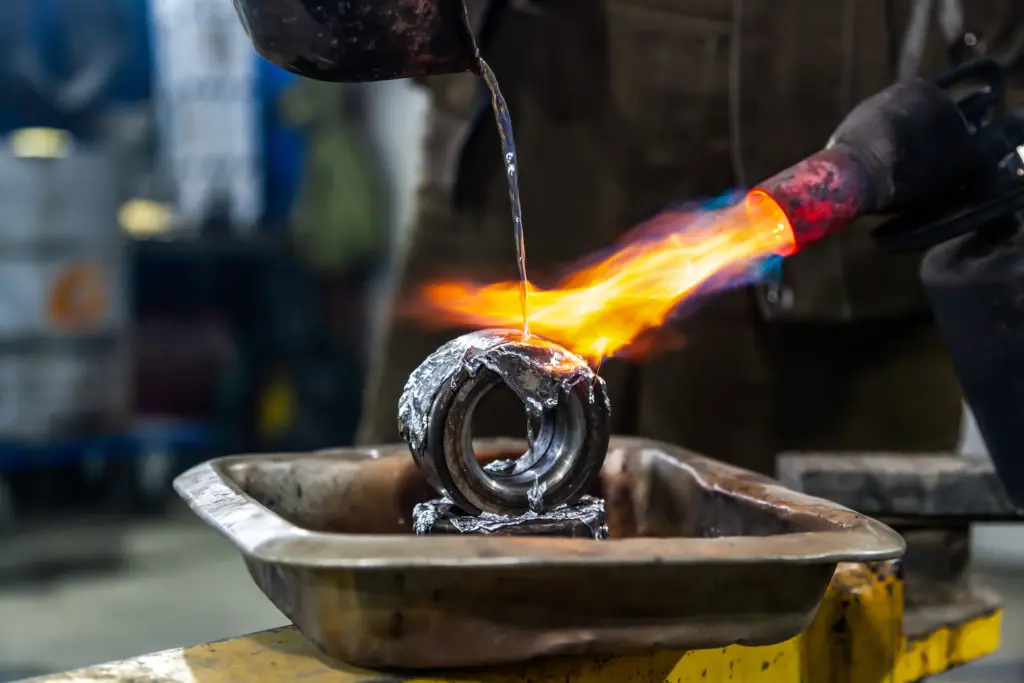
- Any general industry setting where lead-containing materials are melted, cut, ground, or handled
Additional Product Details
Why Choose This Lead Safety Certification?
OSHA 1910.1025 Compliance
Addresses requirements of OSHA 29 CFR 1910.1025 Lead for General Industry, including exposure limits, monitoring, methods of compliance, protective clothing and hygiene, respiratory protection, medical surveillance, Medical Removal Protection, hazard communication, and recordkeeping.
Comprehensive Health Hazard Training
Goes beyond regulatory recitation to teach the underlying medicine: how lead accumulates in the body, why nervous-system and kidney damage is often irreversible, the reproductive effects on both men and women, and why lead can harm you long before you feel any symptoms.
Lead PEL and Exposure Monitoring Training
Provides clear instruction on the lead PEL (50 µg/m³ TWA), the action level (30 µg/m³ TWA), the extended-shift formula, the monitoring schedule, and worker rights to observe monitoring and receive written notification of results.
Medical Surveillance and Medical Removal Protection Training
Walks learners through the full medical surveillance program — biological monitoring, medical examinations, the multiple physician review mechanism — and the Medical Removal Protection program that keeps a worker’s pay and seniority intact for up to 18 months when removal is required.
Take-Home Lead Coverage
Includes specific coverage of how lead dust travels home on clothing, shoes, skin, and in vehicles, poisoning workers’ families — and the hygiene, change-room, and housekeeping practices that prevent it.
All General Industry Lead Operations Covered
- Battery manufacturing and recycling
- Primary and secondary lead smelting
- Lead pigment and lead chemical manufacturing
- Nonferrous foundries
- Indoor and outdoor firing ranges
- Radiator repair, soldering, and scrap-metal operations
- Any general industry setting where lead is melted, cut, ground, or handled
Real Documented Case Studies
All three case studies are drawn from published public health surveillance reports and federal enforcement records — CDC/NIOSH MMWR reports and OSHA citations — not fabricated scenarios.
Immediate Certificate Access
Upon completion, receive your printable Lead Training Certificate instantly — valid for documenting the training component of OSHA-required lead safety programs.
Flexible Online Learning
- Complete training at your own pace
- Access from any device (computer, tablet, mobile)
- No scheduling conflicts or travel required
- Affordable alternative to in-person classroom training
Frequently Asked Questions
How long does lead safety training take?
This online lead certification takes approximately 2 hours to complete, including the final exam. You can work at your own pace and pause or resume as needed.
What is the difference between general industry and construction lead training?
OSHA has separate lead standards. 29 CFR 1910.1025 covers general industry — including battery plants, smelters, foundries, and firing ranges. 29 CFR 1926.62 covers construction work at job sites. The exposure limits are the same (PEL of 50 µg/m³ TWA, action level of 30 µg/m³), but the trigger-task and compliance rules differ between the two standards. This course covers general industry only.
What is the PEL for lead?
The Permissible Exposure Limit (PEL) is 50 micrograms of lead per cubic meter of air (50 µg/m³), calculated as an 8-hour time-weighted average. For shifts longer than 8 hours, the PEL is reduced using the formula 400 ÷ hours worked. The Action Level is 30 µg/m³ — reaching it triggers exposure monitoring, and for exposure over 30 days per year, medical surveillance and training.
What is the action level for lead exposure?
The action level is 30 µg/m³ of lead as an 8-hour time-weighted average. Reaching the action level does not by itself mean exposure is unsafe in a regulatory sense, but it triggers important obligations: the employer must conduct exposure monitoring, and workers exposed at or above the action level for 30 or more days per year become eligible for medical surveillance and must be trained. Workers and employers commonly confuse the PEL and action level — both numbers matter, but they trigger different requirements.
How often is lead safety training required?
OSHA 29 CFR 1910.1025 requires initial training before assignment for covered workers, and the training must be repeated at least annually. Additional training is needed when job assignments change, when new materials or processes are introduced, and when the written compliance program is updated.
What blood lead level is dangerous?
Risk of disease rises once blood lead climbs above 40 µg/100 g, which is why the standard is built around keeping workers below that level. Workers (male or female) who intend to have children should aim even lower — below 30 µg/100 g — to minimize reproductive risk and protect a developing fetus. Because individual responses vary, no single number guarantees safety, and the length of time a worker has had an elevated level matters as much as the number itself.
Why is take-home lead such a serious hazard?
Lead dust is invisible and odorless. It settles on clothing, shoes, skin, hair, tools, and vehicles, and a worker can carry it home without knowing. Once home, it contaminates cars, furniture, floors, and carpets, where children are especially vulnerable to swallowing it. Documented cases have repeatedly traced elevated blood lead in workers’ children back to take-home dust — which is why showering, changing clothes, and strict housekeeping are required where exposure is above the PEL.
$41.95
Bulk Pricing
Save more when you purchase multiple seats for your team.
Need more than 100 seats? Contact our sales team for custom enterprise pricing.
Related Courses

Join Our Newsletter
By joining the Enhance Safety Training newsletter, you'll receive valuable information on how to train your staff, how to thrive in your current job, and, of course, notified of any new course offerings.
Tips and News in Your Inbox