
OSHA Silica Safety Training
29 CFR 1910.1053

Bulk Pricing
Save more when you purchase multiple seats for your team.
Need more than 100 seats? Contact our sales team for custom enterprise pricing.
Get Your Respirable Crystalline Silica Safety Certification Online
OSHA 29 CFR 1910.1053 Respirable Crystalline Silica Training for General Industry Workers – Including Respiratory Protection, Medical Surveillance, Hazard Communication, Signs, Recordkeeping, and Building Your Site Silica Safety Program
Product Details
Description
This respirable crystalline silica safety course provides comprehensive training on the health hazards, exposure controls, and worker protections required by 29 CFR 1910.1053 for general industry and maritime workers. The course teaches learners to recognize silica-generating tasks, apply the permissible exposure limit and action level, implement engineering and work practice controls, use respirators correctly, participate in medical surveillance, and meet hazard communication and recordkeeping requirements.
According to the California Department of Public Health, hundreds of engineered stone workers have been diagnosed with silicosis since 2019, with confirmed deaths and dozens of lung transplants — most among young workers in their 30s and 40s. This course provides the foundational knowledge required to protect yourself and your coworkers from silicosis, lung cancer, COPD, and the other serious diseases caused by respirable crystalline silica.
Course Includes
- Interactive Training Modules
- Real-World Case Studies
- Mindful Minute
- Final Assessment
- Ergonomics Break
- Instant Certificate Upon Completion
- Lifetime Access to Resources
- Mobile-Friendly Learning Platform
Course Content
- Understanding Respirable Crystalline Silica and Health Hazards
- Exposure Limits, Assessment, and Monitoring
- Engineering Controls and the Written Exposure Control Plan
- Regulated Areas and Housekeeping
- Respiratory Protection
- Medical Surveillance
- Hazard Communication, Signs, and Recordkeeping
- Building Your Site Silica Safety Program
Who This Course is For
- Engineered stone and natural stone countertop fabricators
- Foundry workers (molders, shakeout operators, grinders, finishers)
- Abrasive blasting operators
- Glass and ceramic manufacturing workers
- Brick, tile, and concrete product manufacturing workers
- Refractory installation and maintenance workers
- Dental laboratory technicians
- Jewelry production workers
- Maintenance technicians who perform silica-generating tasks
- Supervisors of silica-exposed operations
- Facility managers, safety coordinators, and industrial hygienists
Work Settings
- Stone fabrication shops (countertops, monuments, architectural stone)
- Foundries (iron, steel, aluminum, non-ferrous)
- Glass, ceramic, and pottery manufacturing facilities
- Brick, tile, and concrete product manufacturing plants
- Refractory manufacturing and installation operations
- Dental laboratories and jewelry production facilities
- Maritime and shipyard operations
- Abrasive blasting operations (shipyards, surface preparation, finishing)
- Any general industry setting where silica-containing materials are cut, ground, drilled, crushed, or polished
Additional Product Details
Why Choose This Silica Safety Certification?
OSHA 1910.1053 Compliance
Addresses all requirements of OSHA 29 CFR 1910.1053 Respirable Crystalline Silica for General Industry and Maritime, including exposure limits, assessment, engineering controls, regulated areas, respiratory protection, medical surveillance, hazard communication, and recordkeeping.
Comprehensive Health Hazard Coverage
Goes beyond regulatory recitation to teach how silica particles damage lung tissue, why silicosis is irreversible, the multi-system effects on kidneys and immune function, and the elevated TB risk that drives required baseline testing.
Engineered Stone Hazard Coverage
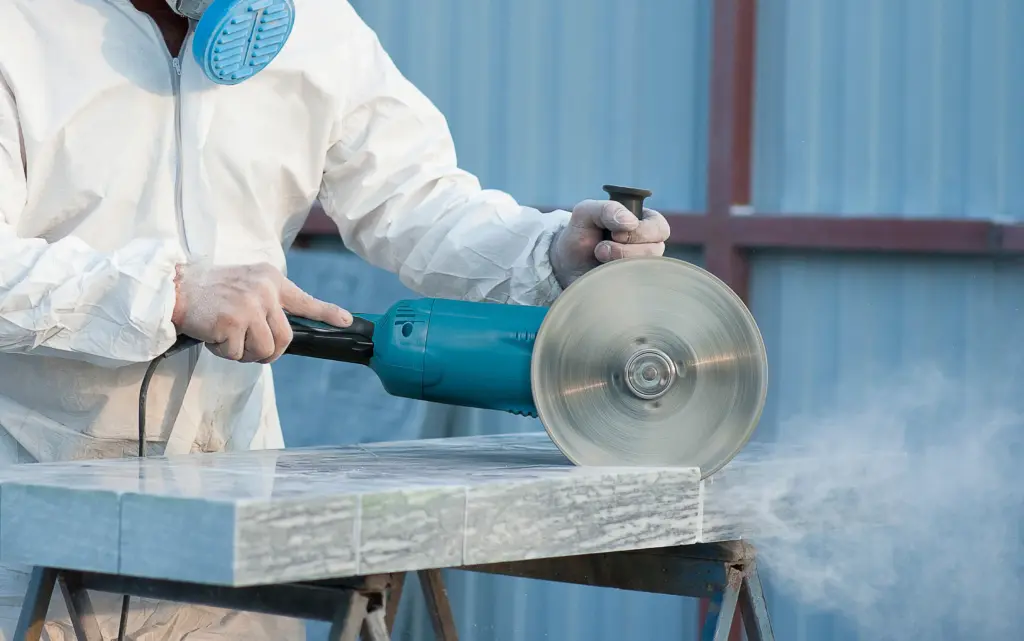
Detailed coverage of the engineered stone silicosis epidemic affecting young fabrication workers nationwide, the high silica content of quartz countertop material (90%+), and the specific controls required when working with this uniquely hazardous material.
All General Industry Silica Operations Covered
- Engineered stone and natural stone fabrication
- Foundry operations (sand molding, shakeout, casting cleaning)
- Abrasive blasting (silica and non-silica abrasives on silica substrates)
- Glass, ceramic, brick, and concrete product manufacturing
- Refractory production and installation
- Dental laboratory and jewelry production
- Maritime operations
Real Documented Case Studies
All three case studies are drawn from published public health surveillance reports — the California silicosis surveillance program, the 2019 multi-state MMWR outbreak report, and the Massachusetts Department of Public Health alert.
Immediate Certificate Access
Upon completion, receive your printable Respirable Crystalline Silica Training Certificate instantly — valid for documenting the training component of OSHA-required silica safety programs.
Flexible Online Learning
- Complete training at your own pace
- Access from any device (computer, tablet, mobile)
- No scheduling conflicts or travel required
- Affordable alternative to in-person classroom training
OSHA Training Requirements | 29 CFR 1910.1053
When Silica Safety Training Is Required:
- Before being assigned to work that involves silica exposure
- Before being eligible for medical surveillance enrollment
- When job assignments change to include silica-generating tasks
- When new materials, processes, or controls are introduced
- After incidents, near-misses, or exposure assessments showing elevated exposures
- When the written exposure control plan is updated
- As refresher training per employer policy
Frequently Asked Questions
How long does silica safety training take?
This online respirable crystalline silica certification takes approximately 3 hours to complete, including the final exam. You can work at your own pace and pause/resume as needed.
What is the difference between general industry and construction silica training?
OSHA enforces two separate respirable crystalline silica standards, and knowing which applies to your work is the first step toward the right training.
29 CFR 1910.1053 — General Industry & Maritime (This Course) covers silica exposure in fixed-facility operations: stone fabrication, foundries, glass and ceramic manufacturing, brick and concrete product manufacturing, dental labs, abrasive blasting, and shipyard work. If you cut, grind, or polish silica-containing materials inside a shop or plant, this standard applies to you.
29 CFR 1926.1153 — Construction covers silica exposure on job sites: masonry, concrete cutting, drilling, demolition, tuckpointing, and similar field tasks at temporary locations. It’s structured around Table 1 exposure control methods, with different respirator triggers and medical surveillance rules.
Same hazard, different rules. Both standards share the same permissible exposure limit (50 µg/m³ as an 8-hour TWA) and action level (25 µg/m³), but the engineering controls, regulated area requirements, and compliance pathways differ. A fabricator working in a shop takes the general industry course; a mason installing that same countertop on site takes the construction course. Workers who do both may need training under both standards.
This course covers 29 CFR 1910.1053 only. For construction work, see our separate OSHA Construction Silica Training course.
What is the PEL for respirable crystalline silica?
The Permissible Exposure Limit (PEL) is 50 micrograms per cubic meter (50 µg/m³) of respirable crystalline silica, calculated as an 8-hour time-weighted average. The Action Level is half the PEL at 25 µg/m³ — reaching this level triggers exposure assessment obligations and medical surveillance eligibility.
What is the action level for silica exposure?
The action level is 25 µg/m³ of respirable crystalline silica as an 8-hour time-weighted average — exactly half the PEL. Reaching the action level does not by itself mean exposure is unsafe in a regulatory sense, but it triggers two important obligations. First, the employer must continue exposure assessment for affected workers. Second, workers exposed at or above the action level for 30 or more days per year become eligible for medical surveillance. Workers and employers commonly confuse the PEL and action level — both numbers matter, but they trigger different requirements.
How often is silica safety training required?
OSHA 29 CFR 1910.1053 does not specify a hard re-training interval. Training is required before workers are assigned to silica-generating tasks, and whenever job assignments change to include new silica exposures, when new materials or processes are introduced, when the written exposure control plan is updated, and after incidents or near-misses involving silica. Many employers schedule refresher training annually as a best practice. Site-specific updates may require more frequent training even when the regulation does not strictly mandate it.
What is a written exposure control plan?
A written exposure control plan is a document the employer must establish and maintain under 1910.1053(f)(2). It must describe the silica-generating tasks in the workplace, the engineering controls, work practices, and respirators used for each task, and the housekeeping methods used to limit exposure. The plan must be reviewed and updated at least annually. Workers covered by the standard, their designated representatives, and OSHA all have the right to examine and copy this plan. If you are not sure whether your workplace has a current exposure control plan, ask your supervisor or safety coordinator.
Who qualifies for medical surveillance under the silica standard?
Workers who will be occupationally exposed to silica at or above the action level (25 µg/m³ TWA) for 30 or more days per year qualify for medical surveillance. The employer must make the surveillance available at no cost to the worker, performed by a Physician or Other Licensed Health Care Professional (PLHCP).
$41.95
Bulk Pricing
Save more when you purchase multiple seats for your team.
Need more than 100 seats? Contact our sales team for custom enterprise pricing.
Related Courses

Join Our Newsletter
By joining the Enhance Safety Training newsletter, you'll receive valuable information on how to train your staff, how to thrive in your current job, and, of course, notified of any new course offerings.
Tips and News in Your Inbox