

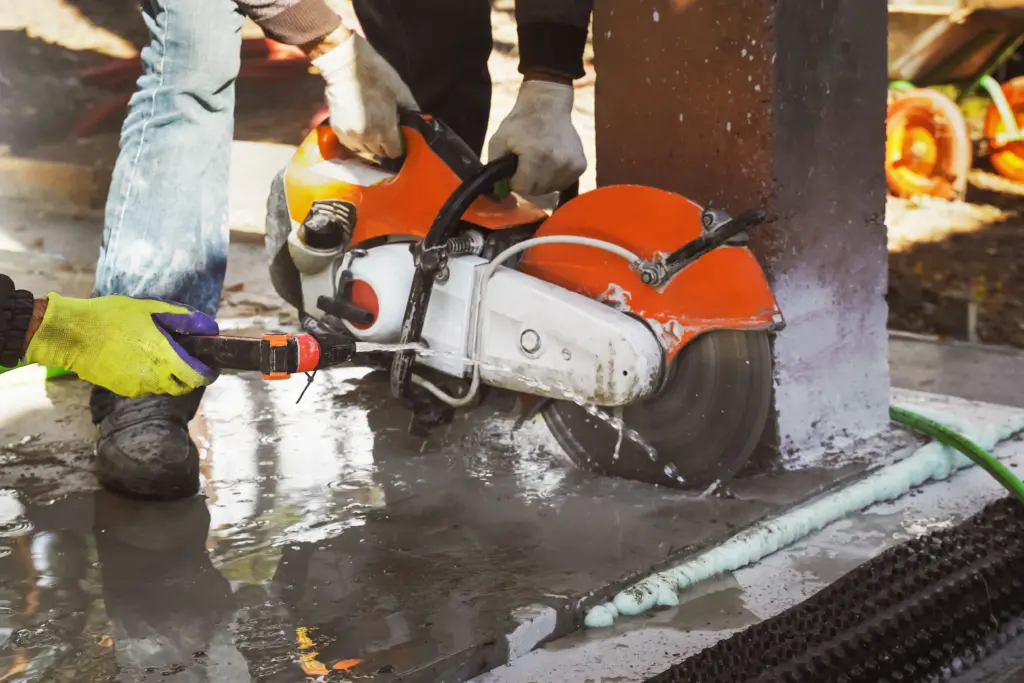
Most crews associate silica exposure with cutting or grinding concrete. That’s accurate, but it’s an incomplete picture. Respirable crystalline silica is present in concrete, but also in brick, block, mortar, stone, and many other common construction materials. Any task that generates fine dust from these materials can create an exposure that falls under OSHA’s silica standard.
What the Standard Actually Requires
29 CFR 1926.1153 covers respirable crystalline silica in construction. It sets a permissible exposure limit and requires employers to use engineering and work practice controls to limit exposure, rather than relying on respirators as the primary control. For many common tasks, OSHA’s Table 1 specifies exact control methods, such as wet cutting or dust collection systems paired with vacuums, that satisfy the standard without requiring separate exposure monitoring.
The controls specified in Table 1 aren’t optional. For tasks listed in the table, the specified control method determines compliance. Skipping the water suppression or vacuum attachment and relying on a respirator alone typically doesn’t meet the requirement unless separate air monitoring shows exposure is controlled another way.
Tasks That Trigger Silica Exposure More Often Than People Expect
- Tuckpointing and mortar removal
- Drilling into concrete or masonry
- Using a jackhammer or handheld power chisel
- Walk-behind saws cutting concrete or asphalt
- Grinding or surface preparation on concrete floors
Some of these feel routine enough that crews don’t think of them as silica exposures. The dust generated is often fine enough that it isn’t readily visible in the air, which makes the hazard easy to underestimate compared to a visible dust cloud from demolition work.
Why Silica Exposure Doesn’t Show Up Right Away
Unlike an acute injury, silica-related health effects, including silicosis and increased risk of lung cancer and kidney disease, develop from repeated exposure over years. That delay is part of why silica controls get skipped more often than controls for immediate hazards. There’s no visible consequence on the day the control is missed. The exposure accumulates quietly until it eventually shows up as a diagnosis long after the work that caused it.
This is a pattern similar to some of the warning signs we’ve written about elsewhere on the blog, where a hazard that doesn’t produce an immediate, visible consequence tends to be deprioritized even when the long-term risk is significant. Our warning signs post covers a different context, but the underlying pattern of overlooking what isn’t immediately visible applies here too.
Building an Exposure Control Plan
OSHA’s standard requires a written exposure control plan for tasks not covered by Table 1 or where an employer chooses not to follow Table 1 methods. At minimum, that plan should identify tasks that generate silica dust, specify the control methods used for each, and describe how respiratory protection is provided when engineering controls alone aren’t sufficient.
A plan that exists but isn’t followed on site provides the same false sense of protection as a permit system that isn’t enforced, the same issue we covered in our recent hot work permit and fire watch piece.
Getting Crews Trained on the Actual Controls
Respirators alone are not the primary defense against silica exposure. Wet cutting methods, vacuum dust collection, and proper equipment setup do most of the work, and crews need to understand how to use that equipment correctly for it to be effective. If your team needs training on the specific control methods required for common tasks, our Silica Safety Training for Construction covers the exposure control requirements along with practical setup for the most common silica-generating tasks.