

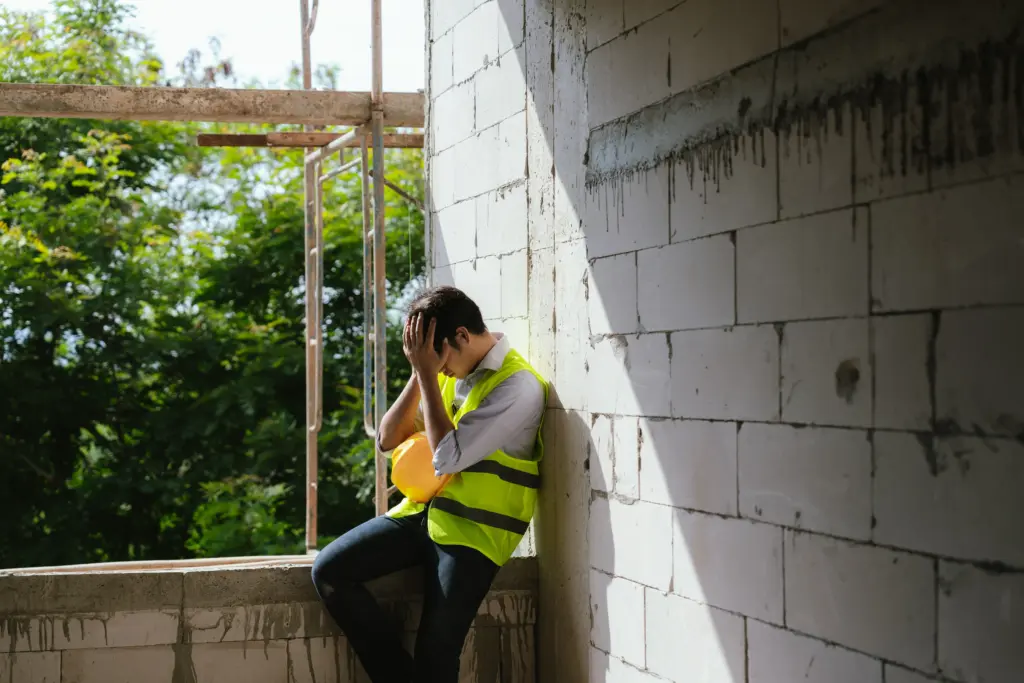
The Numbers Tell a Grim Story
Construction workers die by suicide at a rate 3.7 times the national average, according to data from the CDC and the Center for Construction Research and Training (CPWR). That makes construction one of the highest-risk industries for suicide in the United States. More construction workers die by suicide each year than from falls, the industry’s leading cause of on-the-job fatality.
Let that sink in. The hard hat protects against falling debris. Nothing in the standard PPE kit addresses what’s happening inside a worker’s head.
The Bureau of Labor Statistics reports roughly 1,000 construction worker suicides annually. CPWR’s research puts the rate at approximately 53.3 per 100,000 workers, compared to 14.5 per 100,000 for the general population. These numbers have been climbing, not falling.
Who Is Most at Risk
The crisis hits some groups harder than others. Male construction workers between ages 25 and 54 carry the highest risk. Given that men make up roughly 89% of the construction workforce, this demographic represents the vast majority of the industry.
Certain trades show elevated rates as well. Workers in extraction, iron and steel work, and roofing face particularly steep numbers. The common thread: physically demanding, high-risk work with seasonal layoffs and long stretches away from home.
Contributing Factors
Job Instability and Financial Stress
Construction is cyclical by nature. Demand swings with the economy, the season, and the project pipeline. Workers can go from 60-hour weeks to zero income in the span of a pay period. That kind of unpredictability creates chronic financial stress, which is one of the strongest predictors of mental health decline.
Many workers are paid hourly with no guaranteed minimums. Benefits, when they exist, often disappear during layoffs. Health insurance gaps mean that even workers who recognize they need help may not be able to afford it.
Chronic Pain and Injury
Construction is brutal on the body. BLS data shows the industry consistently ranks among the top sectors for musculoskeletal injuries, with over 200,000 nonfatal injuries and illnesses reported annually. Chronic pain is endemic.
The connection between chronic pain and depression is well-documented in medical literature. Workers dealing with persistent back pain, joint damage, or repetitive stress injuries face a significantly higher risk of depression and substance use disorders. Many self-medicate because they can’t afford to miss work for treatment, or because the culture discourages admitting vulnerability.
Substance Use
SAMHSA data consistently places construction among the top industries for substance use disorders. Roughly 15% of construction workers report heavy alcohol use, and the industry has one of the highest rates of opioid use of any sector.
The pattern is predictable: injury leads to prescription painkillers, which leads to dependency, which leads to self-medication after prescriptions run out. Add in the culture of drinking after work as social bonding, and you have an environment where problematic use can hide in plain sight for years.
The Culture of Toughness
Construction culture prizes physical toughness and stoicism. “Rub some dirt on it” isn’t just a punchline. It’s an operating philosophy that extends far beyond physical injuries.
Workers who express emotional distress risk being seen as weak, unreliable, or not cut out for the job. In an industry where your reputation directly impacts whether you get called back for the next project, that perception carries real economic consequences. So workers stay quiet. They push through. They self-medicate. And the numbers keep climbing.
Isolation and Disconnection
Many construction workers travel for work. Extended time away from family and social support networks is standard in the industry. A worker might spend months on a remote project site, living in temporary housing, disconnected from the relationships that typically buffer against mental health crises.
Even on local projects, the nature of the work can be isolating. Crews form and dissolve as projects begin and end. Building deep, supportive relationships is harder when your coworkers change every few months.
Sleep Disruption
Early start times, long commutes to remote sites, and physically exhausting workdays create chronic sleep disruption. Research consistently links poor sleep quality to increased risk of depression, anxiety, and suicidal ideation. Construction workers report higher rates of sleep problems than workers in most other industries.
The Business Impact
Mental health isn’t just a human cost. It hits the bottom line hard.
- Absenteeism: Workers dealing with untreated depression miss an average of 27 lost workdays per year, according to the American Psychiatric Association. In construction, where schedule delays cascade through every trade on site, those absences carry outsized costs.
- Presenteeism: Workers who show up but can’t fully function cost employers even more than those who stay home. Reduced concentration on a construction site doesn’t just hurt productivity. It creates safety hazards.
- Turnover: The construction industry already faces a severe labor shortage. Losing experienced workers to mental health crises, substance use disorders, or suicide compounds an existing workforce problem. The cost to recruit and train a replacement worker ranges from $5,000 to $15,000 depending on skill level.
- Safety incidents: Workers experiencing depression, sleep deprivation, or substance use impairment are significantly more likely to be involved in workplace accidents. Each recordable injury costs an average of $42,000 in direct costs alone, per the National Safety Council.
- Workers’ comp and insurance: Companies with higher incident rates pay higher premiums. The indirect costs of mental health-related safety incidents, including investigation time, regulatory scrutiny, and project delays, often exceed direct costs by a factor of 4 to 10.
Conservative estimates from the Construction Industry Alliance for Suicide Prevention place the total annual cost of mental health issues in construction at over $5 billion, factoring in lost productivity, turnover, safety incidents, and healthcare costs.
Why Standard Approaches Fall Short
Most workplace mental health programs were designed for office environments. They assume workers have consistent schedules, internet access during the workday, private spaces for phone calls, and ongoing relationships with the same employer and coworkers.
None of that maps to construction.
Employee Assistance Programs (EAPs), the most common employer-provided mental health resource, see utilization rates of roughly 3-5% in construction, compared to 6-8% across all industries. Workers cite lack of awareness, distrust of confidentiality, inconvenient scheduling, and cultural stigma as barriers.
Digital mental health tools face similar adoption challenges. Many jobsites restrict phone use. Workers may lack reliable internet access. And app-based solutions feel disconnected from the reality of physical labor in harsh conditions.
What the Industry Can Do
Normalize the Conversation
The single most impactful step is making mental health a routine part of safety culture. That means:
- Including mental health topics in regular toolbox talks and safety meetings
- Having leadership talk openly about stress, mental health, and available resources
- Posting crisis resources (988 Suicide & Crisis Lifeline, Crisis Text Line) alongside other safety information on jobsites
- Training foremen and superintendents to recognize warning signs and respond appropriately
Train Supervisors as First Responders
Foremen and crew leads interact with workers daily. They’re often the first to notice behavioral changes. Investing in mental health first aid training for supervisors gives them the tools to intervene early, before a crisis develops.
Programs like Mental Health First Aid (MHFA) and the Construction Industry Alliance for Suicide Prevention’s STAND-UP curriculum provide structured training specifically relevant to construction environments.
Reduce Barriers to Care
Making help accessible means meeting workers where they are:
- Offering telehealth options with evening and weekend availability
- Providing multilingual resources (a significant portion of the construction workforce is Spanish-speaking)
- Ensuring EAP information is communicated during onboarding and reinforced regularly, not just posted on a bulletin board
- Building mental health check-ins into existing safety processes rather than creating separate programs workers have to seek out
Address Root Causes
Mental health programs alone won’t solve a problem driven by structural factors. Companies serious about this issue also need to look at:
- Scheduling predictability: Giving workers as much advance notice as possible about schedule changes, layoffs, and project timelines
- Pain management: Providing access to physical therapy, ergonomic assessments, and non-opioid pain management resources
- Substance use support: Creating pathways to treatment that don’t automatically result in termination
- Financial wellness: Offering financial literacy resources, emergency assistance funds, and benefits that bridge gaps during layoffs
Measure and Track
What gets measured gets managed. Companies should track mental health metrics alongside traditional safety KPIs:
- EAP utilization rates
- Voluntary turnover and exit interview themes
- Near-miss incidents that may indicate impairment or distraction
- Anonymous workforce surveys on stress, job satisfaction, and perceived support
Industry-Wide Efforts
Several organizations are pushing the industry forward:
- The Construction Industry Alliance for Suicide Prevention provides free resources, training materials, and the annual STAND-UP campaign
- CPWR funds ongoing research into construction worker mental health and develops evidence-based interventions
- The AGC of America has integrated mental health into its safety programming and advocates for policy changes at the federal level
- OSHA’s updated Recommended Practices for Safety and Health Programs now include mental health as a component of worker well-being
The Cost of Inaction
Every year the industry delays meaningful action, roughly 1,000 more construction workers die by suicide. Thousands more struggle silently with depression, anxiety, substance use disorders, and chronic pain that erodes their quality of life and their ability to work safely.
The construction industry builds infrastructure that lasts decades. It’s time to invest the same level of planning, resources, and commitment into the mental health of the people doing the building.
If you or someone you know is struggling, help is available 24/7. Contact the 988 Suicide & Crisis Lifeline by calling or texting 988. You can also reach the Crisis Text Line by texting HOME to 741741. These services are free, confidential, and available around the clock.