

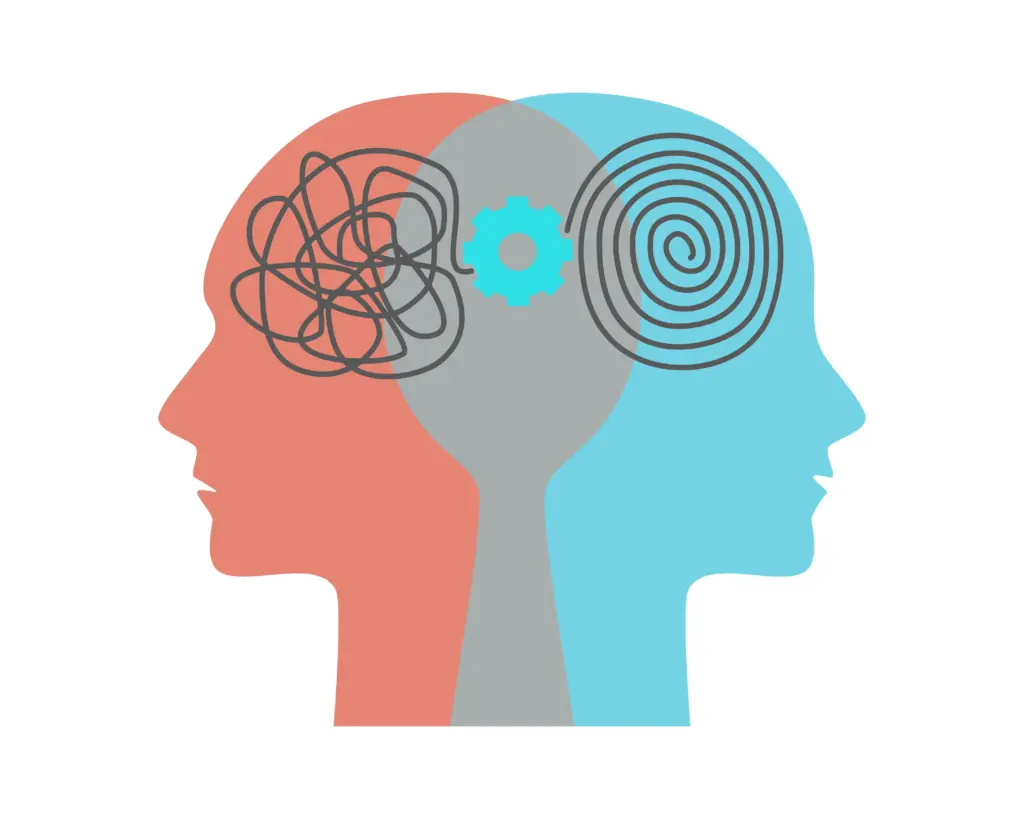
The Compliance Checkbox Problem
OSHA 10 and OSHA 30 courses cover hazard recognition, fall protection, electrical safety, and a dozen other critical topics. They save lives. No argument there. But they operate on an assumption that breaks down fast in the real world: that a worker who has completed the required training modules will consistently apply what they learned.
That assumption ignores the human being inside the hard hat.
An ironworker running on four hours of sleep because he spent the night arguing with his wife about bills is not operating at baseline. A laborer managing untreated anxiety makes different risk calculations than one who is not. A foreman quietly drinking through a divorce will miss hazards he would have caught six months ago.
None of these scenarios show up on a training transcript. The worker passed the course. The employer checked the box. And yet the jobsite just got more dangerous.
What the Injury Data Actually Shows
The Bureau of Labor Statistics reported 5,283 fatal work injuries in 2023. Construction accounted for the largest share of any single industry. The “Fatal Four” hazards (falls, struck-by, electrocution, caught-in/between) still dominate, and OSHA training directly addresses every one of them.
So why do these numbers stay stubbornly high even as training completion rates climb?
Part of the answer is exposure: more workers, more hours, more risk. But a growing body of research points to something else. The gap between knowing what to do and being cognitively and emotionally capable of doing it in the moment.
A 2022 study published in the Journal of Safety Research found that workers reporting high psychological distress were 2.3 times more likely to experience a workplace injury than those reporting low distress. Sleep deprivation research from the National Safety Council shows that fatigue-related productivity losses cost employers roughly $1,967 per employee annually, and that fatigue increases injury risk by 70%.
These are not soft metrics. They are hard numbers with direct safety implications.
The “Whole Worker” Concept
The idea is straightforward. A worker does not leave their mental health, financial stress, family problems, or substance use at the gate when they badge in. These factors follow them onto the scaffold, into the trench, and up the ladder. Any serious approach to workplace safety has to account for the whole person, not just the part that interacts with equipment.
This is not about replacing OSHA training. It is about recognizing that compliance-based training is necessary but insufficient. The whole worker approach adds layers:
- Physical safety: OSHA compliance, hazard recognition, PPE, site-specific protocols. This is table stakes.
- Mental health awareness: Recognizing signs of distress in yourself and coworkers, reducing stigma around seeking help, knowing what resources exist.
- Financial wellness: Addressing the financial stress that distracts workers, disrupts sleep, and drives risk-taking behavior.
- Leadership development: Equipping foremen and crew leads to recognize struggling workers and respond appropriately, rather than just managing production schedules.
Mental Health in Construction: The Numbers Nobody Talks About
Construction has one of the highest suicide rates of any industry in the United States. The CDC reported that male construction workers die by suicide at a rate nearly four times higher than the general population. The full scope of the crisis is staggering. That is not a typo. Four times.
Substance use disorder is similarly elevated. The SAMHSA National Survey on Drug Use and Health consistently ranks construction among the top three industries for both heavy alcohol use and illicit drug use among full-time workers.
The culture of the industry contributes. Construction selects for toughness, stoicism, and pushing through discomfort. Those traits keep people productive on a jobsite. They also prevent people from asking for help when they need it. The phrase “suck it up” is practically an industry motto.
Meanwhile, the work itself generates mental health risk factors at scale. Irregular schedules. Extended time away from family. Physical pain and injury. Job insecurity tied to project pipelines and weather. Financial volatility from seasonal layoffs. Every one of these is a documented risk factor for depression, anxiety, and substance use.
Traditional safety training addresses none of it.
How Mental Health Becomes a Safety Hazard
The connection between mental health and physical safety is not abstract. It operates through specific, measurable pathways.
Attention and focus. Depression and anxiety both impair concentration. A worker who cannot maintain focus is a worker who misses the frayed sling, the unguarded edge, the changing conditions. Hazard recognition requires sustained attention. Mental health conditions directly undermine it.
Decision-making. Stress hormones impair the prefrontal cortex, the part of the brain responsible for risk assessment and impulse control. A financially stressed worker offered overtime on a task they are not trained for is more likely to say yes. A depressed worker may take shortcuts not out of laziness but because their capacity for careful deliberation is diminished.
Fatigue. Insomnia is one of the most common symptoms of both depression and anxiety. A worker who looks fine and reports feeling fine may be running on fragmented sleep for weeks. The cognitive impairment from chronic sleep deprivation is comparable to alcohol intoxication. You would not let a drunk worker operate a crane. But you cannot breathalyze for exhaustion.
Substance use. Workers self-medicating with alcohol or drugs are impaired on the job. Full stop. But the pathway starts with untreated mental health conditions, chronic pain, or overwhelming stress. Addressing only the substance use without addressing the underlying cause is like treating a symptom while ignoring the disease.
Interpersonal conflict. A crew that is not communicating well is a crew that makes mistakes. Workers dealing with anger, irritability, or emotional dysregulation (common symptoms of depression, PTSD, and substance use) create friction that degrades the teamwork safety depends on.
What Employers Can Actually Do
This is where most articles get vague. Here are specific steps that move the needle.
Integrate mental health content into existing safety training. You do not need a separate program. Add a 15-minute module on recognizing signs of distress. Include it in toolbox talks. Normalize the conversation within the framework workers already engage with.
Train frontline supervisors to notice and respond. Foremen are the early warning system. They see behavioral changes before anyone else. But most foremen received zero training on how to have a conversation with a struggling worker. Give them a simple framework: notice the change, express concern without judgment, point to resources. They do not need to be therapists. They need to be human.
Make EAP information visible and repeated. Most companies have an Employee Assistance Program. Most workers have no idea it exists, how to access it, or that it is confidential. Post the information. Mention it in orientations. Bring it up in safety meetings. Repetition matters.
Address financial stress directly. Offer financial literacy resources. Consider partnering with organizations that provide budgeting help for workers with irregular income. Financial stress is the number one driver of mental health problems in the working population. You cannot separate the two.
Adopt a peer support model. Programs like Construction Working Minds train workers to recognize warning signs in their peers and connect them with help. Peer-based models work in construction because they align with the existing crew structure and the industry’s relationship-driven culture.
Measure what matters. Track leading indicators beyond lagging ones. Near-miss reports, safety observation quality, crew cohesion scores, and voluntary EAP utilization all tell you more about your actual safety posture than your recordable rate alone.
The 988 Lifeline
If you or someone you know is struggling with suicidal thoughts or emotional distress, the 988 Suicide and Crisis Lifeline is available 24/7. Call or text 988. It is free, confidential, and staffed by trained counselors.
For construction-specific mental health resources, the Construction Working Minds program offers training and toolkits designed for the industry.
The Bottom Line
OSHA training teaches workers how to identify a fall hazard. It does not teach them how to identify a panic attack, recognize that their drinking has become a problem, or ask for help when they are drowning in debt. Until safety programs account for the full range of factors that put workers at risk, the gap between training completion and actual safety performance will persist.
The whole worker approach is not a replacement for compliance. It is the recognition that compliance alone has a ceiling, and that ceiling is made of everything we are currently choosing to ignore.
Building a safer jobsite starts with seeing the whole person standing on it.