
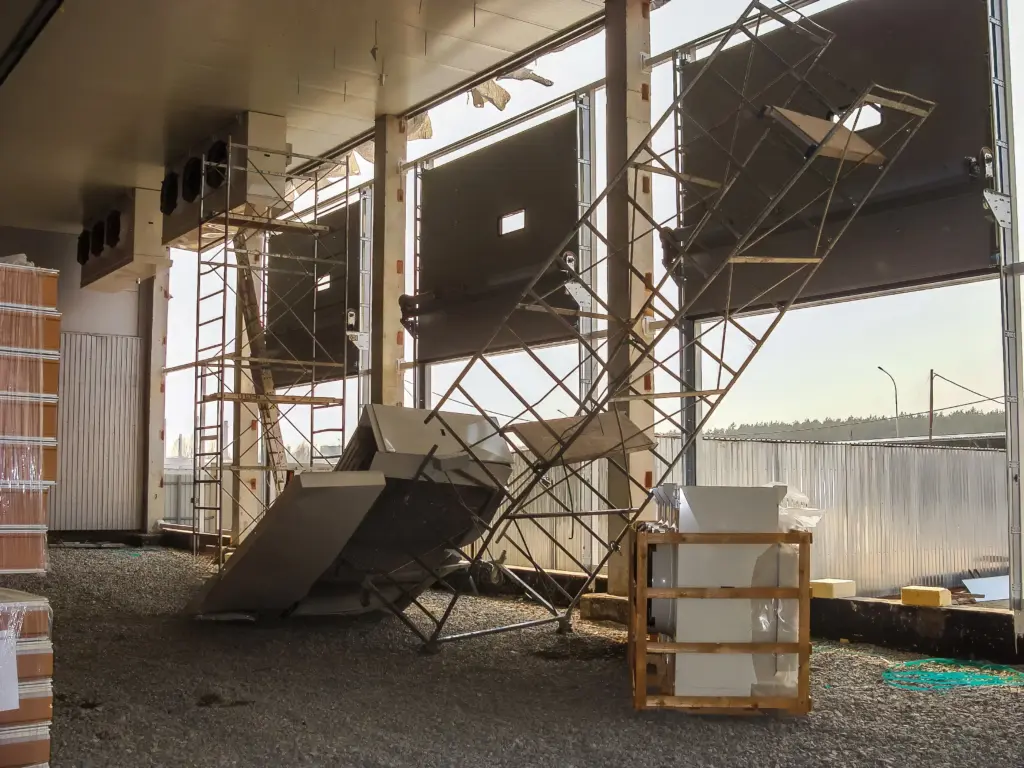
OSHA is currently investigating a fatal fall at SpaceX’s Starbase site in South Texas, where a 25-year-old contractor died in May after falling from scaffolding during early-morning work. He wasn’t a SpaceX employee. He worked for one of the contractors building out the site. That detail raises a question that comes up constantly on multi-contractor job sites: when the person hurt isn’t on your payroll, is it still your problem?
Under OSHA’s rules, the answer is often yes. Here’s how the multi-employer worksite policy actually works, and what it means for anyone running a site where more than one company’s crew is on the ground.
What the multi-employer worksite policy says
OSHA has long held that more than one employer can be cited for the same hazard on a shared worksite, even when the injured worker doesn’t work for the company being cited. This reflects how construction sites actually operate: a general contractor controls the site, subcontractors bring in their own crews, and hazards created by one company’s work can expose workers who have nothing to do with that company.
This is exactly the situation OSHA has flagged repeatedly at SpaceX’s Starbase facility. The site has drawn seventeen citations since 2021 across its Texas, Washington, and California locations, including a set of serious violations earlier this year tied to a crane that wasn’t properly inspected before it collapsed. A site with that citation history, and workers from multiple contractors moving through it daily, is precisely the environment the multi-employer policy was built to address.
The four roles OSHA looks at
When OSHA investigates an incident on a shared site, it doesn’t just ask who employed the injured worker. It evaluates which company played which role in relation to the hazard:
Creating employer caused the hazard through its own work, whether or not its own employees were exposed to it.
Exposing employer has employees exposed to a hazard, even one it didn’t create itself.
Correcting employer is responsible for correcting a hazard, often true of a general contractor with authority over site conditions.
Controlling employer has general supervisory authority over the site, including the power to correct hazards or require others to do so, even without day-to-day involvement in the specific task.
A single company can hold more than one of these roles at once, and a single incident can result in citations to multiple employers if the facts support it. A subcontractor that created a hazard, a general contractor that had authority to catch it and didn’t, and a controlling entity that set site-wide safety expectations can all end up named in the same investigation.
Why injury history matters before an incident happens
OSHA doesn’t evaluate an incident in isolation. A company’s prior citation history and injury rate shape how investigators read a new investigation. Total Recordable Incident Rate, or TRIR, measures injuries and illnesses per 100 full-time workers and is one of the most common benchmarks for comparing a site’s safety performance against its industry. A site running well above its industry’s typical rate is treated as a pattern worth investigating further, not a series of unrelated events.
If your site’s injury rate has been trending upward, or the same type of citation keeps showing up across inspections, that history shapes how seriously the next incident is treated and whether a citation lands as an isolated serious violation or is read as part of a broader pattern.
What this means for general contractors and site owners
If your company brings subcontractors onto a site you control, or you’re a subcontractor working under someone else’s site authority, a few practices reduce exposure under this policy:
Document who has authority over what. Contracts that spell out which party is responsible for correcting specific categories of hazards make it far easier to demonstrate reasonable diligence if OSHA investigates.
Don’t assume “not my employee” means “not my citation.” If your company has the authority to identify and correct a hazard, even one affecting another contractor’s crew, that authority is exactly what makes you a controlling or correcting employer under this policy.
Track incident and near-miss patterns across every contractor on-site, not just your own crew. A hazard that’s caused two near-misses for a subcontractor’s workers is information the controlling employer needs, not just the subcontractor.
Build joint safety orientations for multi-contractor sites. A site where every crew, regardless of employer, has been briefed on the same hazards and reporting expectations closes a lot of the gaps this policy exists to address.
Building this into your safety program
Multi-employer worksites are the norm in construction, and hazard responsibility doesn’t stop at your own payroll. If your team manages subcontractors or works on sites controlled by a general contractor, our OSHA Construction Training covers hazard recognition and site responsibility in a way that holds up no matter whose name is on a worker’s paycheck.
Sources: The Texas Tribune, May 19, 2026 · TechCrunch, May 18, 2026