

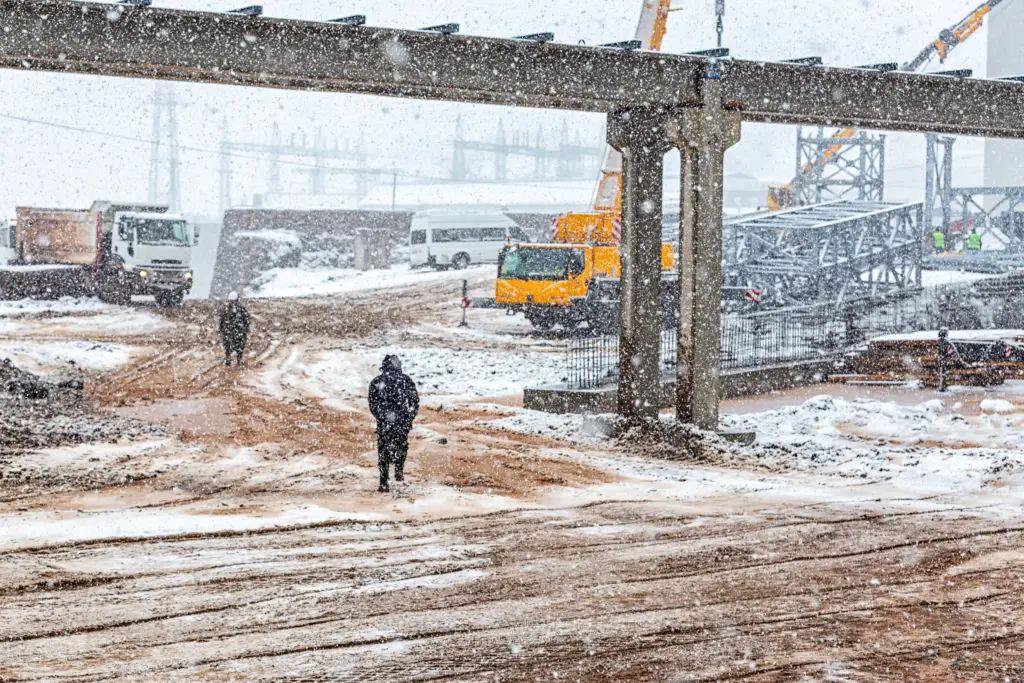
OSHA doesn’t have a specific standard for working in the cold, but employers are still responsible for protecting workers from cold stress. Under the General Duty Clause of the OSH Act, employers must keep the workplace free from recognized hazards likely to cause death or serious harm, and OSHA treats cold stress as one of those hazards.
In practice, that means training workers to recognize the warning signs, giving them warm places to recover, and planning the work around the weather. Here’s what that looks like on a job site.
What is cold stress?
Cold stress happens when cold temperatures, wind, or wetness pull heat from the body faster than it can be replaced. Skin temperature drops first, then core body temperature, which can lead to tissue damage, serious illness, and death.
OSHA groups cold stress into four conditions: hypothermia, frostbite, trench foot, and chilblains. Each has its own warning signs and first aid, covered in the table below.
Does OSHA have a cold weather standard?
No. OSHA has no standard written specifically for cold environments. Employers are still covered by the General Duty Clause, Section 5(a)(1) of the OSH Act, which requires a workplace free from recognized hazards.
OSHA’s guidance tells employers to train workers on cold stress, monitor their condition, schedule frequent short breaks in warm and dry areas, and use engineering controls like radiant heaters. If your crews work through both seasons, our post on where OSHA’s federal heat rule stands covers the summer side.
How cold is too cold to work outside?
There’s no single temperature where outdoor work becomes unsafe. Risk depends on air temperature, wind speed, whether workers are wet, and what they’re used to. In regions that don’t see much winter weather, OSHA notes that near-freezing temperatures already count as extreme cold.
Wind makes a big difference. At an air temperature of 40°F with 35 mph wind, exposed skin cools as if it were 28°F. Wetness matters just as much. Hypothermia can set in above 40°F when someone is chilled by rain, sweat, or cold water, and trench foot can develop at temperatures as high as 60°F when feet stay wet.
Check the wind chill along with the forecast high before each shift, especially for crews working at height or in open areas where wind picks up.
What are the signs of cold stress?
Shivering is the first sign to take seriously. It means the body is losing heat. The more dangerous stage comes when shivering stops, because low body temperature affects the brain and a worker may not realize what’s happening to them.
| Condition | What causes it | Warning signs | First aid |
|---|---|---|---|
| Hypothermia | Core body temperature drops below 95°F | Uncontrollable shivering, then loss of coordination, fumbling, confusion, slurred speech, and slowed breathing; shivering may stop | Call 911. Move the worker somewhere warm, replace wet clothing with dry layers, and give warm sweetened drinks only if they’re alert. Start CPR if there’s no pulse. |
| Frostbite | Skin and underlying tissue freeze, usually fingers, toes, nose, and ears | Reddened skin with gray or white patches, tingling, aching, numbness, skin that feels firm or hard, blisters | Get to a warm area. Don’t rub the skin, apply snow or water, or break blisters. Rewarming is safest when done by medical professionals. |
| Trench foot | Feet stay wet and cold for long periods, even up to 60°F | Red skin, numbness, tingling, swelling, leg cramps, blisters, and in severe cases bleeding under the skin or gangrene | Remove wet boots and socks, dry the feet, keep them elevated, and avoid walking on them. Seek medical care. |
| Chilblains | Repeated exposure of bare skin to temperatures just above freezing to 60°F | Redness, itching, inflammation, possible blistering | Avoid scratching, warm the skin slowly, and keep any blisters clean and covered. |
Trench foot deserves extra attention on construction sites. Wet feet lose heat about 25 times faster than dry feet, so crews working in excavations, standing water, or wet concrete are at higher risk. Our post on trench and excavation safety covers the other hazards in that work.
How can employers prevent cold stress on the job site?
The most effective prevention combines training, warm breaks, and planning the work around the conditions. OSHA’s guidance points to a few practical steps:
- Train before the cold arrives. Workers should know the warning signs of each condition, what first aid to give, and how to dress for cold, wet, and windy weather.
- Dress in layers. Several loose layers trap heat better than one heavy coat. Add a hat, insulated waterproof boots, and gloves, and keep spare dry socks and gloves on site.
- Schedule warm breaks. Frequent short breaks in a heated trailer, vehicle, or enclosed area let the body rewarm. Set up radiant heaters or windbreaks where crews work for long stretches.
- Provide warm liquids. Warm, sweetened drinks help, and it’s easy to get dehydrated in cold weather. Skip alcohol.
- Plan the heavy work for the warmest hours. Shift strenuous tasks to midday when you can.
- Use the buddy system. Pair workers so they can watch each other for symptoms, since hypothermia can affect someone’s judgment before they notice it.
- Ease new and returning workers in. OSHA recommends increasing workload gradually and allowing more warm breaks for new hires and anyone returning after time away. Our new hire safety orientation checklist covers what else to go over in a worker’s first week.
Risk factors like wet clothing, exhaustion, poor physical conditioning, and some health conditions, including high blood pressure, diabetes, and hypothyroidism, make cold stress more likely.
Cold weather changes other job site hazards too
Winter conditions make familiar hazards harder to manage. Ice and frost make ladders, scaffold planks, and walking surfaces slippery, and bulky gloves make it harder to grip tools and work fall protection hardware. Shorter days also mean more work in low light.
Clear and treat walking surfaces before work starts, inspect scaffolds and ladders after freezing weather, and double-check that gloves still allow a worker to operate their harness and lanyard properly. Our fall protection basics post covers what OSHA requires at height in any season.
5-minute toolbox talk: cold stress
Use these points for a quick morning talk on cold days:
- Shivering means your body is losing heat. Speak up and take a warm break.
- If a coworker starts fumbling, slurring words, or seems confused, get them somewhere warm and call for help.
- Wet socks and gloves are a hazard. Swap them for dry ones as soon as they get wet.
- Never rub frostbitten skin, and don’t break blisters.
- Check on your buddy at every break.
If your crews work through the winter and you’d like training built around your sites and conditions, we build custom courses for employers.